Air Parameters
Explore the measurable parameters of air quality, what they represent, and what they reveal about our environment and the air around us.
Air Lab monitors six parameters:
- ppm – Carbon dioxide (CO₂)
- VOCs – Volatile Organic Compounds
- NOx – Nitric Oxide (NO) and Nitrogen Dioxide (NO₂)
- °C / °F – Temperature
- RH – Relative Humidity
- hPa – Atmospheric Pressure
Carbon Dioxide
Source: rehva.eu
Carbon dioxide (CO₂) is an odorless and colorless gas that occurs naturally in the atmosphere. Humans and animals exhale it, while plants absorb it during photosynthesis.
Excessive levels of CO₂, whether from poorly ventilated spaces or industrial processes, can accumulate and displace oxygen. This affects your body in various ways, including headaches, dizziness, shortness of breath, fatigue, and difficulty concentrating.
CO₂ is measured in Parts Per Million (ppm). Outdoor CO₂ levels typically range between 400 and 420 ppm (or 0.04% CO₂ in the air by volume), while normal indoor CO₂ levels are in the range of 400–1000 ppm.
The indicator LED on your Air Lab will start blinking red above 1000 ppm and stay constantly on above 1500 ppm until the levels drop. While these levels don't pose an immediate health risk, they indicate poor air quality and commonly cause drowsiness. When you see this warning, consider letting in some fresh air or moving to a different area.
Volatile Organic Compounds
Source: epa.gov, iaqscience.lbl.gov, SGP41 Datasheet
Volatile Organic Compounds (VOCs) comprise thousands of different organic chemicals that are mostly present as gases at room temperature. VOCs can be human-made or naturally occurring, and can be odorless or odorous. They are emitted from many solid or liquid products, such as:
- Paints
- Cosmetics, including perfumes
- Pesticides
- Air fresheners
- Wood preservatives
- Hobby supplies (e.g. glues, markers, lacquers, modeling cement)
- Moth repellents
- Adhesives
- Printers
Some VOCs may pose health risks with prolonged exposure, while others are harmless.
VOCs are measured by your Air Lab as an index that indicates the relative concentration in the air. The SGP41 sensor reports values in a range of 0–500, where 100 represents the average over the past 24 hours. Values above 100 indicate a higher concentration than usual, while values below 100 indicate a lower concentration.
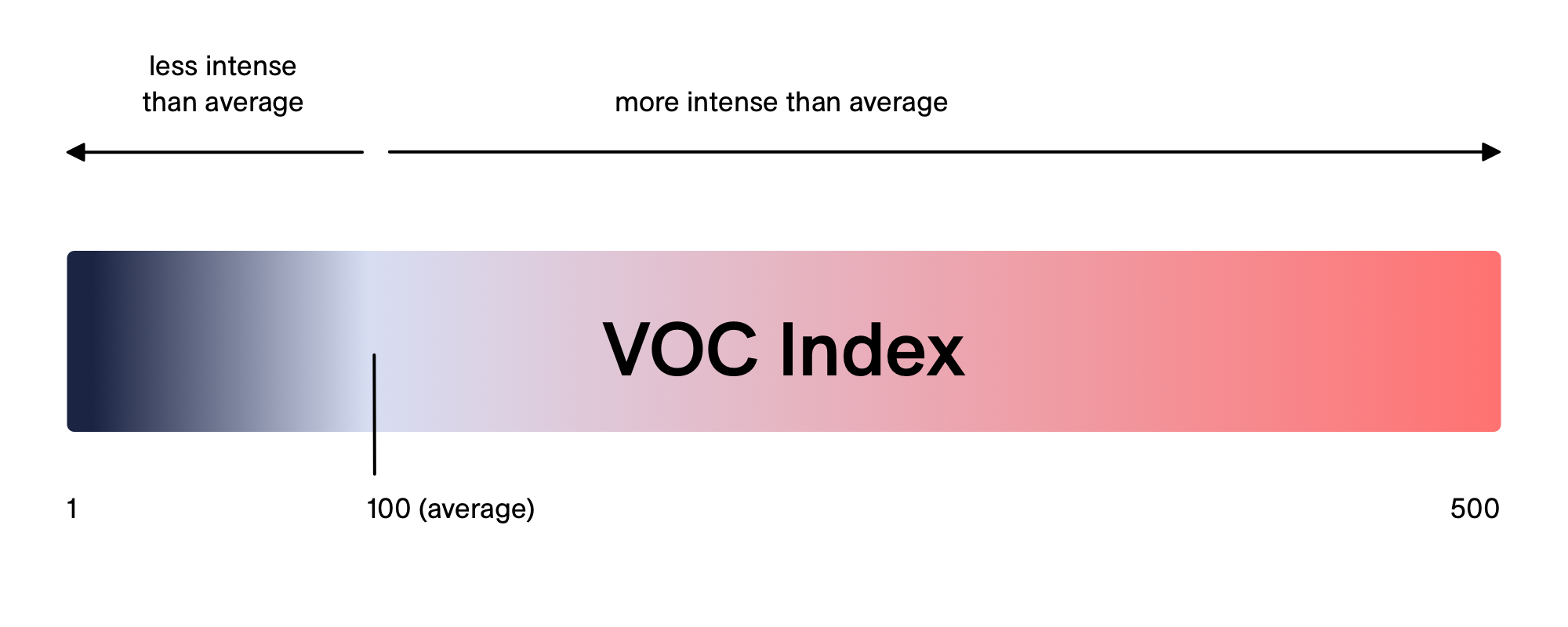
The sensor can detect both odorous and odorless gases, but it can't discriminate between different VOCs. This means that the reading shows changes in VOC intensity relative to the room's history, rather than an absolute value—similar to how your nose adapts to smells over time. When analyzing the values, keep the environmental circumstances in mind: there is no absolute good or bad value.
Nitrogen Oxides
Source: epa.gov, science.org, unicef.org, SGP41 Datasheet
NOx is shorthand for nitric oxide (NO) and nitrogen dioxide (NO₂). These highly reactive gases are created by the combustion of fuel in vehicles, power plants, and other industrial processes. NOx also occurs naturally in the environment, for example, in wildfires, lightning, and volcanic eruptions. On a large scale, it's also produced by microbial processes in the soil due to common modern agricultural practices.
Inhaling NOx is known to cause respiratory issues and, with long-term exposure to high concentrations, can contribute to the development of asthma. NOx is one of the main contributors to air pollution, which is the second leading global risk factor for death.
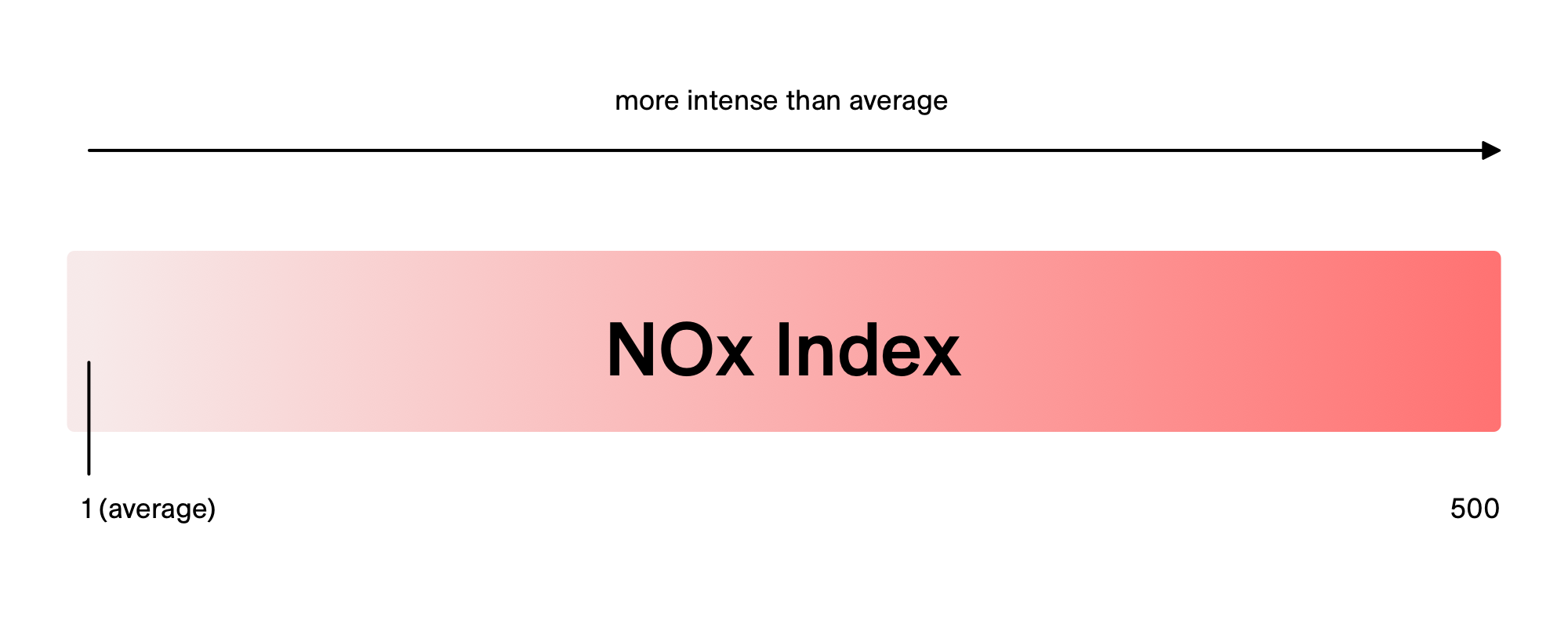
NOx is measured by the same SGP41 sensor as VOCs, using a similar relative index. Unlike VOCs where the baseline is 100, the NOx baseline is 1. When nitrogen oxides are detected, values range from 2 to 500.
Temperature
Temperature is measured either in Celsius (°C) or Fahrenheit (°F). You can change the unit on-device or in Air Lab Console.
Your Air Lab automatically compensates for self-heating from its internal electronics. After turning on or switching sampling modes, readings may take a few minutes to stabilize as these compensations adjust.
Relative Humidity
Source: weather.gov
Relative Humidity (RH) is the percentage of water vapor in the air relative to the air's temperature. It expresses the amount of vapor currently present compared to the maximum amount the air could hold at that temperature.
Colder air can hold less water vapor than warm air. This means that when the absolute humidity level in the air remains constant but the temperature drops, the RH percentage will increase.
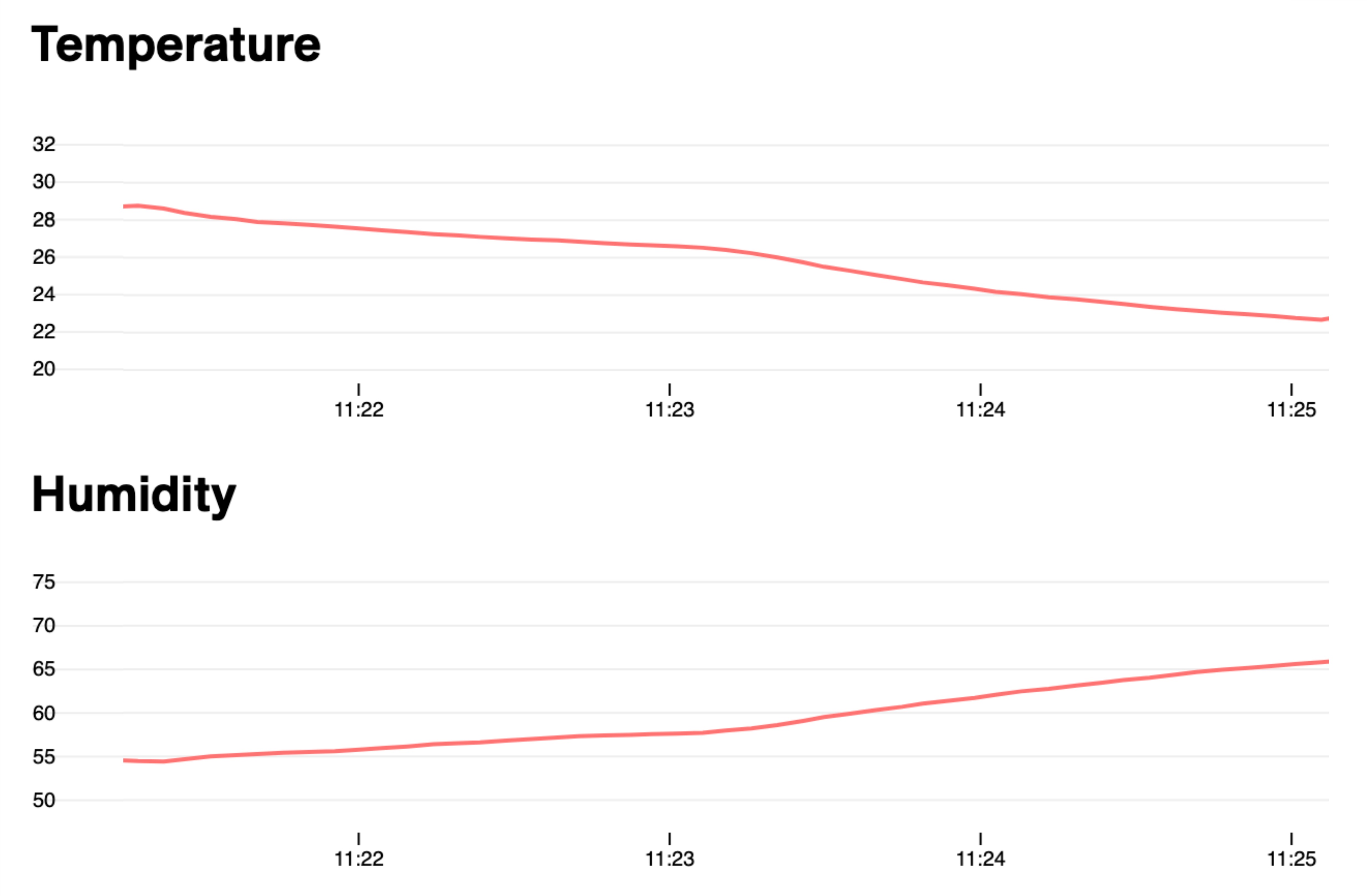
The graphs above show this correlation – as the temperature goes down, relative humidity goes up. This was measured by moving your Air Lab from the sun to the shade, a scenario where only the temperature changes and not the absolute humidity.
Atmospheric Pressure
Source: Meteo Swiss, ndbc.noaa.gov, LPS22 Datasheet
hPa stands for hectopascal, an absolute unit of measurement for atmospheric pressure. Essentially, it's the weight of an air column extending from the Earth's surface to the boundary of the atmosphere. 1000 hPa equates to air pressure of approximately 10 tonnes/m².
Atmospheric pressure is affected by altitude and weather conditions. The higher the altitude, the lower the atmospheric pressure. This is because the air column above is shorter and therefore weighs less. At sea level, the average atmospheric pressure is around 1,013 hPa; at 1,500 meters above sea level, it's approximately 850 hPa.
Temperature affects atmospheric pressure due to changes in air density. Warm air is less dense than cold air because heat causes air molecules to spread apart. This lower density means that warm air exerts less pressure than cold air at the same altitude.
Back to Top